"Oh! Celia, Celia, Celia Shits!"

I'll be honest. I was not exactly excited to teach Early British Literature this semester. True, my Masters is technically in Early British Literature. True also that I love a great many texts from that era. But my undergraduate focus was on Modern American Lit and my PhD is in Pop Culture, and the only reason I have that Early Brit Lit focus is because I really enjoyed two professors I had in my MA program. One was a medievalist (who may get his own blog post at a later date) and the other a Restoration literature guy, Dr. Doll. They both let me write about comics all I wanted, with the Dr. Doll eventually serving as my advisor when I wrote my thesis on Iron Man and Captain America.
Dr. Doll was somewhat famous on our campus. His work was actually primarily on a guy named Samuel Pepys, who barely even wrote proper "literature" (I promise that's the most pretentious thing I'll say all day) and is instead remembered for his detailed, daily, and often hilariously honest diaries. In one entry from September 28, 1665, Pepys describes how a maid forgot to leave him a chamber pot and he was "forced in this strange house to rise and shit in the chimney twice." History truly is full of #relatable moments, huh? Dr. Doll also did quite a bit of work on Samuel Johnson, but he's perhaps most fondly remembered for teaching the obscene poetry of Jonathan Swift to undergrads.
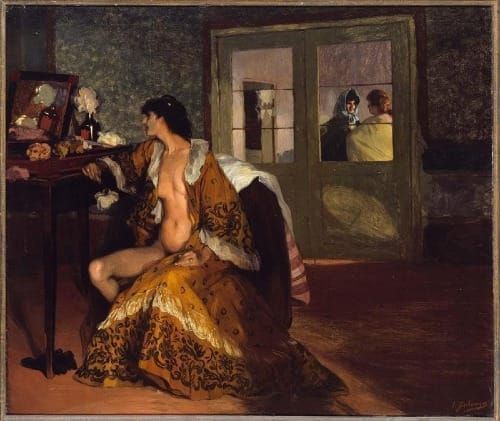
In the course of his Early British Literature survey course, Dr. Doll regularly taught Swift's "unprintable" scatalogical poems, including "The Lady's Dressing Room," in which the young male protagonist of the poem, Strephon, snoops about his paramour's dressing room and is disgusted by what he finds; a dress with sweaty stains in the armpits, combs and brushes covered in powder, dirty towels, and, most disturbingly to young Strephon, a chamber pot filled with...well, what normally goes into chamber pots. While many of Strephon's observances do reveal how unappealing beauty rituals can be, particularly those of the 1700s - one line makes reference to "puppy water," or dog urine (or possibly boiled puppies), which was used as both a stain remover and skin care treatment - many are also speculative, as when Stephon finds a pair of tweezers and assumes Celia uses them to pluck a beard. As the poem draws to a close, Swift writes that Strephon "stole away / repeating in his amorous fits, / Oh! Celia, Celia, Celia shits!" Dr. Doll would make his recitation of this line a theatrical production, unlike Strephon, who I always pictured slinking out of the dressing room, head down, tail tucked, and muttering under his breath. No, Dr. Doll would cry out in a great booming voice to the delight of his students and with no regard for any stray passerby in the hall, "OH! CELIA! CELIA! CELIA SHITS!" I wish I could convey to you the melodrama with which Dr. Doll would shout these words, occasionally even collapsing in his chair in a faux faint. So memorable was his recitation that present and past students would shout these words across the quad upon seeing their beloved professor, giddy at the idea that poetry could be so crude.
Dr. Doll is now retired, but hopefully I did his legacy justice when I taught "The Lady's Dressing Room" this fall. I put on my best bravado and wailed about Celia and did my best not to look at the closed door of my classroom and wonder how noise proof it was. My students universally hated Gulliver's Travels, Swift's most famous work, but they loved "The Lady's Dressing Room" and, in my own little addition to Dr. Doll's legacy, they loved Lady Mary Wortley Montagu's clapback poem, "The Reasons that Induced Dr. S. to Write a Poem Call'd the Lady's Dressing Room," a poem in which a fascinating female contemporary of Swift's suggests the reason Swift wrote such a misogynist poem is because he himself couldn't get it up during an encounter with a sex worker. In the poem, the character Swift demands his money back, and, when denied, swears he'll so immortalize her filthy dressing room in writing that she'll never have a customer again. The poem ends with the somewhat less pithy but no less delightful lines, "I'm glad you'll write / you'll furnish paper when I shite."
No one has shouted either lines at me from across the quad and I'm okay with that. I'm building my own legacy, after all. But I hope I paid proper respect to Dr. Doll's, and maybe next year I'll be even louder.